

WHY MEDIA PARTNERSHIPS?
High-quality reporting and storytelling are vital for investigating, proposing, and disseminating systemic solutions to challenges faced by learners from low-income backgrounds. When media highlight problems alongside evidence-based solutions, successful practices have the potential to scale up. Media amplification can also encourage individual policymakers, communities, and government agencies to address critical issues in improving postsecondary education and workforce training outcomes. By framing and amplifying the issues critical to improving postsecondary education and workforce training outcomes, media partners get important information in front of those who can advocate for and make real, systemic change.
Learn more about how our media partnerships support learners from low-income backgrounds.

Bringing Forward Underserved Learners’ Experiences
The Chronicle of Higher Education’s Different Voices of Student Success lifts underserved learners’ experiences and shares best practices for supporting them.
Connecting Postsecondary Education, Training, and Work
The Job, a weekly newsletter from Work Shift News, provides in-depth coverage on education, training, and work, equipping policymakers and others with the information they need to act on it.
Empowering Incarcerated Learners on their Postsecondary Education Journeys
Roadtrip Nation’s video and digital storytelling on postsecondary education in prison connects incarcerated learners, and those who support them, with narratives to help them define their own road in life.
Highlighting Solutions in Postsecondary Education and Workforce Training
The Hechinger Report produces high-quality reporting on research, reforms, and promising solutions with the goal of improving the American education system.
Supporting National Reporting on Postsecondary Education in Prison
Open Campus’ biweekly newsletter College Inside investigates the future of postsecondary education in prison by focusing on incarcerated learners’ stories.
Supporting National Reporting on Rural Postsecondary Education and Workforce Training
Open Campus’ bimonthly newsletter Mile Markers explores the voices and issues shaping postsecondary education and workforce training in rural communities.
Strengthening Media Coverage of Postsecondary Education Topics
The Education Writers Association is the go-to resource for education writers, supporting the expansion of high-quality, thoughtful media coverage nationwide.
Reporting on Postsecondary Education Pathways in Wisconsin
Wisconsin Watch, one of the nation’s longest-standing nonprofit newsrooms, helps residents explore pathways to improving their communities and lives.
Listening to What’s Next in Postsecondary Education
Academic Intelligence’s Future U. podcast series examines the postsecondary education landscape through interviews with national thought leaders and innovators.Workforce Development Grantmaking in Native Nations and Communities Initiative
Field DevelopmentSeeding the Rise Up Summit
Field DevelopmentCreating Enabling Conditions for Adult Reskilling in Rural America through Narrative
Field DevelopmentSupporting the Reimagine Rural Podcast
Field DevelopmentBuilding & Applying Strong Evidence About Postsecondary Success & Economic Mobility
Field DevelopmentBeyond the College Walls: Principles and Partnerships for the Next Community College Decade
Field Development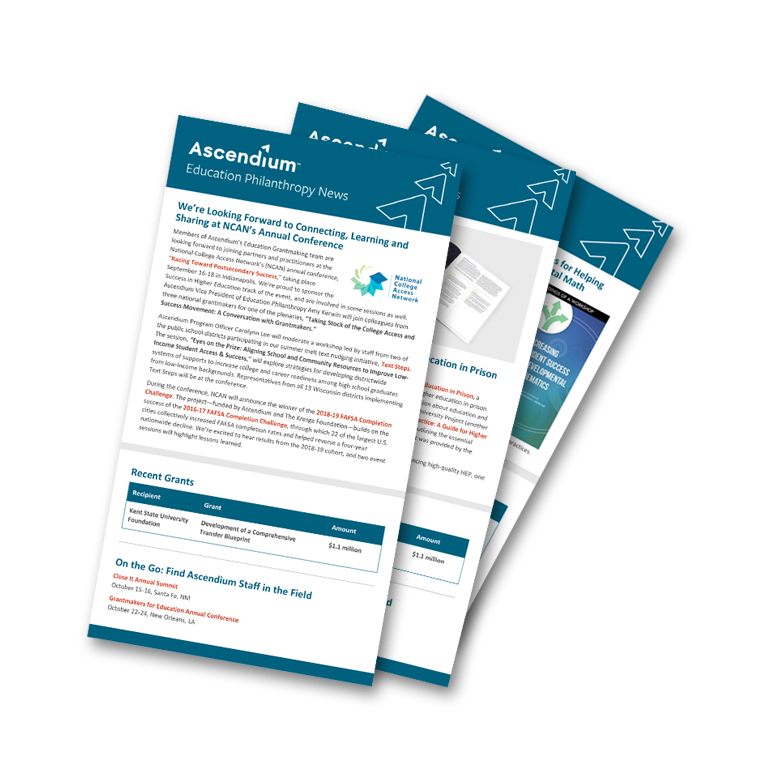
Subscribe and Stay Connected
Get Ascendium news right to your inbox, from grant announcements and project spotlights to where you can find our program staff in the field.