Ascendium Education Philanthropy is a division of Ascendium Education Group.

All News and Insights
Stressed out office worker-Emergencies, Supporting Family, Tuition Costs, Childcare, Inflexible Scheudle, Mental Health, Low-Wage Job
Ascendium

Supporting Success: Building Holistic Systems of Support for Today’s Learners

September 4, 2025 4-minute read

Today’s learners enter postsecondary education or workforce training programs with the goal of completing a credential of value that puts them on the path to career success. However, the path to completion isn’t always easy as today’s learners have unique needs, are often working, supporting families, or struggling with low-wage jobs. They need a comprehensive set of integrated supports that consider their individualized needs to help them achieve success. But current systems of support have not evolved to meet the diverse needs of today’s learners.

Ascendium’s grantees are building and strengthening systems of support and exploring innovations that focus on learners’ experiences as they move through postsecondary education institutions and workforce training programs. Providing individualized holistic supports that address both basic needs and academic needs for learners is just one strategy they are using. Our partners are learning how to support learners from a systems level so their interventions are most effective and can be scaled, sustained, and replicated. 

Many of our partners are using innovative and comprehensive approaches to addressing students’ basic needs.

Texas Community College Education Initiative

The Texas Success Center is piloting the implementation of a new holistic system of support at Texas community colleges. Using the Meadows Institute’s Minding College Minds Framework, colleges have created a campus-wide system of support that addresses mental health needs while encouraging student success by connecting the support to postsecondary credential completion. This initiative bolsters the mental health and wellbeing of each learner by ensuring they stay on path to complete credentials of value in alignment with the state’s new funding model established by House Bill 8. The Minding College Minds support is also offered to learners enrolled in non-credit workforce training programs. Insights from this initiative can help community colleges design and implement comprehensive mental health support for both credit and non-credit learners.

Building Evidence to Increase Rural Learner Success Initiative

Through this Ascendium initiative, grantees are generating an array of research that advances the understanding of rural learners and the pathways that best serve them. Many projects have a focus on holistic support interventions, with early findings highlighting how tailored basic needs supports and clear guidance on pathways can have a significant impact on learner success. A recent blog post from intermediary American Institutes for Research shares emerging themes for educators, policymakers, and community partners looking for ways to provide additional systems of support for rural learners.

Our grantees know that holistic supports should address more than just basic needs. It’s why they are exploring academic innovations such as technology-supported advising, redesigned onboarding, embedding tutoring, and redesigned course scheduling to better support learners from onboarding to completion of a credential.

Georgia State University’s National Institute for Student Success

Georgia State University's National Institute for Student Success is working with six colleges and universities to implement a comprehensive set of reforms that identify and resolve institutional barriers to completion. Georgia State made considerable improvements in learner success rates through reforms including technology-supported advising, predictive analytics, career advising, and redesigned onboarding — all in service of better supporting today’s learners. Based on their success with these reforms, they are now providing services to other institutions in order to advance student success and completion of credentials of value.
The Petey Greene Program

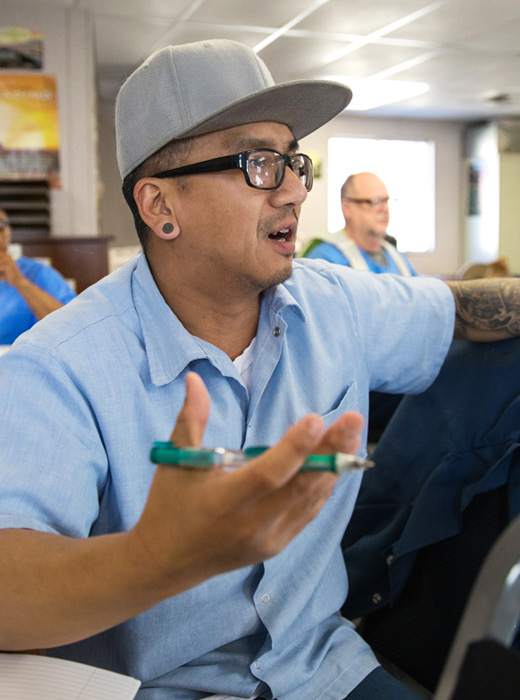
The Petey Greene Program (PGP) is expanding its college programming to increase the number of incarcerated learners who access and succeed in postsecondary education programs. Classrooms in carceral spaces lack the individualized supports needed to ensure these learners’ success as interventions and resources available on free world campuses often aren’t available. PGP is growing its college bridge program that supports incarcerated learners as they transition into and succeed in postsecondary education, expanding tutoring services to include currently incarcerated learners, and developing and integrating a new curriculum that responds to learners who need support around English language and digital literacy. Research from this project will contribute to building an evidence base around college readiness and tutoring support for currently incarcerated learners across the country.

American Association of State Colleges and Universities

The American Association of State Colleges and Universities (AASCU) is working to structurally redesign course scheduling to better serve learners. They have partnered with Ad Astra, a specialist in academic planning and course scheduling solutions, to help 10 member colleges create student-centric schedules. Colleges conducted a change readiness assessment, analyzed scheduling and enrollment data from the past five years, and redesigned the course schedule for the Spring and Fall 2024 terms. A playbook produced from AASCU’s work is available for institutions interested in using their course schedule as a strategy for improving student success.

More Structural Redesign Initiatives on the Horizon

Our grant partners are leading efforts to redesign systems of support that meet the diverse needs of today’s learners. From mental health and emergency aid to academic innovations and structural reforms, our partners are focusing on holistic, scalable solutions that help more learners from low-income backgrounds complete credentials of value and achieve upward mobility.