Supporting Success: Ensuring Learners Earn Credentials that Lead to Upward Mobility
Seeing more learners from low-income backgrounds complete credentials that lead to upward mobility begins with institutions understanding which programs are both in high demand in their labor market and offer a good return on investment for learners. When institutions pair this knowledge with high-quality career advising and relevant career preparation experiences, they can better support learners in selecting and completing career pathways that lead to credentials of value. However, this is not yet the common practice for most institutions.
Unfortunately, learners from low-income backgrounds are more likely to enroll in programs that do not lead to family-sustaining wages (Source: Community College Resource Center). These programs often lack direct alignment with local workforce needs, leaving learners with credentials that do not translate into upward mobility.
KEY TERM
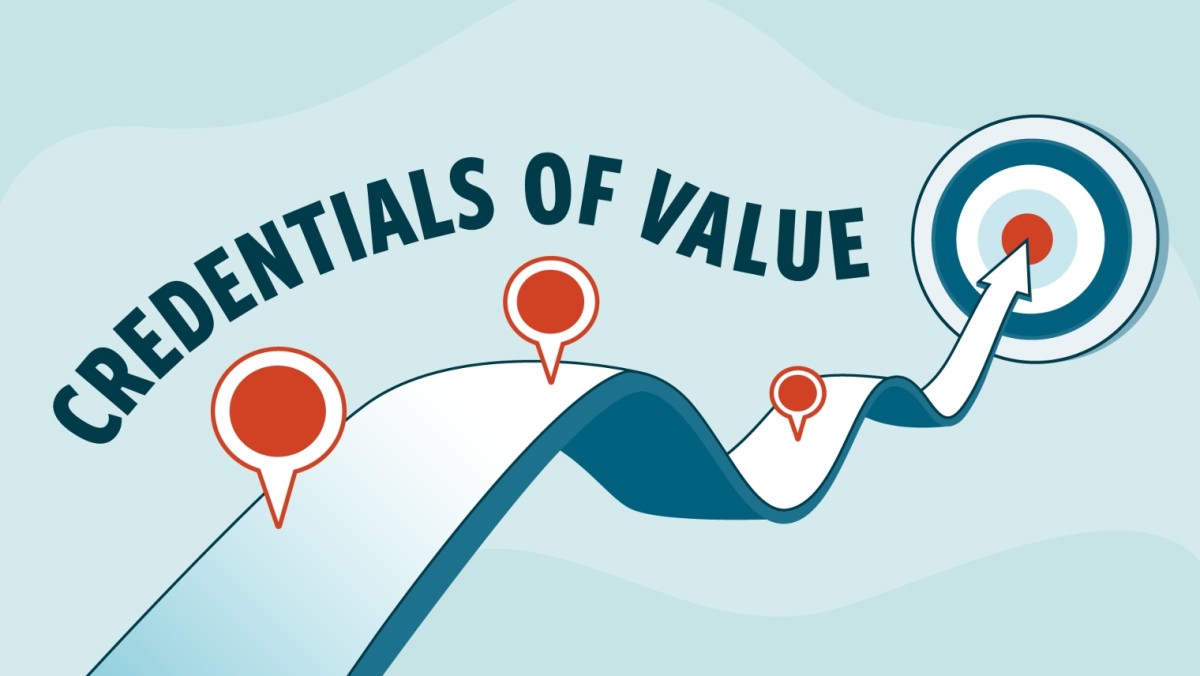
Credential of value: : A postsecondary education certificate, degree, or other certification that is both aligned with local labor market needs and pays back the learner for their costs and time in attaining the credential.
Beyond supporting learners in earning a credential of value, institutions must also build comprehensive systems of support to ensure learners complete their credentials. Today’s learners are diverse — coming from varied backgrounds of race, rurality, history of incarceration, or other factors — and the systems of support needed to help them persist and complete have not evolved at the same pace. Strengthening academic and career advising is especially critical. It helps learners stay on track, make informed decisions, and connect their education to career opportunities early and often. Ascendium’s grantees are leading the way by helping institutions align programs to labor market needs and embed high-quality advising and career preparation support into the learner experience.
KEY TERM
Systems of support: : An interconnected network of academic and non-academic services built into postsecondary education providers’ operations to cohesively address learners' needs — from credential selection through completion.
Ensuring learners complete in high opportunity programs that are relevant and aligned to local market needs.
Aspen Institute
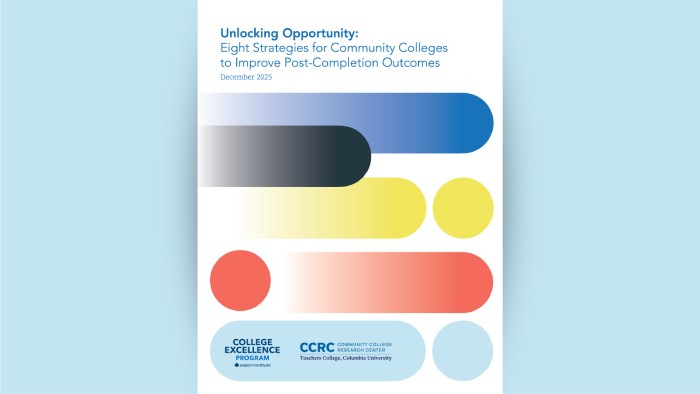
Through its Unlocking Opportunity project, the Aspen Institute’s College Excellence Program is supporting 65 institutions to use data to ensure all learners are enrolled in programs that lead to credentials of value. This initiative is part of Aspen’s broader focus on post-completion success. Notably, the 2025 Aspen Prize for Community College Excellence went to Southwest Wisconsin Technical College, also a participant in Unlocking Opportunity, for its exceptional completion rates and wage outcomes for graduates. The college has committed to ensuring all learners are enrolled in a program with labor market value or a clear path to transfer, with a robust system of supports to ensure they succeed.
NCII
The National Center for Inquiry and Improvement (NCII) is doing similar work through its Rural Guided Pathways Project, which is supporting over 30 institutions in implementing evidence-based reforms tailored to rural learners. These reforms include ensuring that learners complete credentials aligned with local labor market needs. Learn more in this interview with NCII senior fellow and lead co-researcher Dr. Gretchen Schmidt.
Integrating career advising and preparation into the learner experience.
Louisiana Board of Regents
Data show that learners who begin college without a clear career direction are more likely to drop out before they decide on a major. To address this, the Louisiana Board of Regents is working with its institutions to redesign career exploration and advising to enable learners to explore academic programs and select a major by the end of their first year. Institutions are also redesigning course sequence to include major-specific courses early on, helping learners connect what they are studying with their future career possibilities.
University of California Board of Regents
The University of California Irvine is conducting a first-of-its-kind study to assess how career advising, services, and experiences impact college-to-career preparation and transitions. Researchers are also developing and testing a student-facing tool designed to drive more equitable engagement with career services and experiences. This work is building an evidence base about career advising and services to understand more clearly what works best for learners preparing to enter or advance in the workforce.
CIC
While internships are known to have strong post-completion impacts, less is known about other experiential learner models like project-based learning. Council of Independent Colleges (CIC)’s Work-Based Learning Consortium is addressing this gap by leveraging technology to support 25 member institutions in integrating project-based experiential learning experiences into their courses. Their goal is to help learners build transferable skills, gain hands-on experiences, and form professional connections that support their career preparation both during and after college.
Learners and communities win when postsecondary institutions and training providers orient their advising and use of data to help learners attain credentials of value. And society as a whole benefits when more learners from low-income backgrounds experience the upward mobility of these credentials.